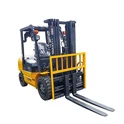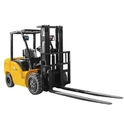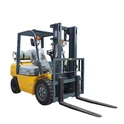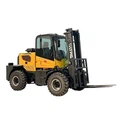


In recent years, with the rise of e-commerce, the offline warehousing and logistics industry has experienced rapid growth. As demand continues to expand, many business managers are facing challenges such as increasing orders and warehouse turnover difficulties. This has raised higher requirements for efficiency, equipment, and personnel. Factors like warehouse rental costs, labor expenses, and the difficulty of finding skilled forklift drivers have forced many companies to seek new solutions to address these warehousing issues. Autonomous forklifts are one such solution.
What changes can autonomous forklifts bring to address the challenges in warehousing?
1. Store More Materials Without Increasing Warehouse Space
As the demand for storage increases, the best way to reduce warehouse footprint costs is to store more goods without expanding the existing warehouse. A practical method is to expand vertically by increasing the shelf height. Based on the aisle width required for autonomous forklifts (which is much narrower than that for manual forklifts), companies can add more shelves, improving storage depth and efficiently organizing space. This maximizes space utilization and increases storage density, allowing more materials to be stored in the same warehouse.
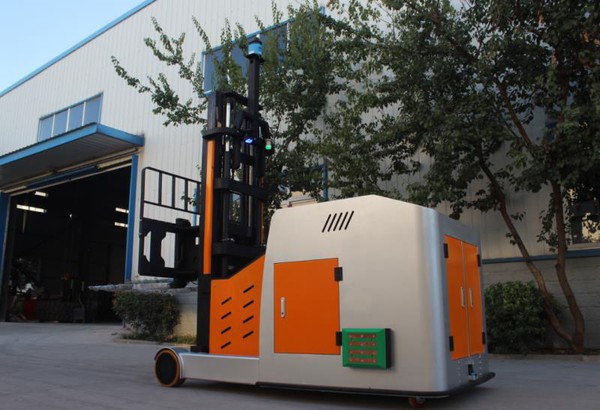
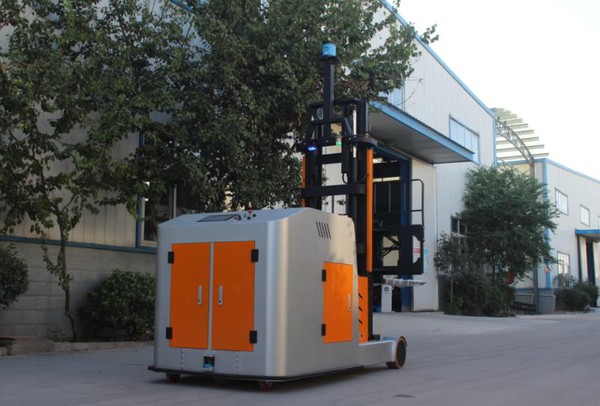
LTMG manufactures AGV Forklifts with superior performance that significantly enhances space utilization while maintaining high operational efficiency.
2. Longer Battery Life, Shorter Charging Time
The driving speed and battery life of autonomous forklifts are two critical factors impacting handling efficiency. While driving speed often grabs attention, battery life and charging time are equally important. As heavy-duty handling equipment, autonomous forklifts consume a significant amount of battery power during operation. If the forklift operates for only one hour but requires three hours to charge, overall operational efficiency will suffer.
LTMG, a leading manufacturer of Automated Guided Vehicles (AGVs) and robotic forklifts, uses high-quality power sources to extend battery life and enable automatic charging, ensuring 24-hour operation and maximizing uptime.
3. Centralized Control System, IoT Connectivity, and Full Automation
To achieve automated logistics, autonomous forklifts are not just standalone equipment but also crucial data carriers. LTMG's centralized control system can connect up to 15 autonomous forklifts for coordinated operation. This system offers functions such as multi-vehicle scheduling, route planning, automatic obstacle avoidance, task management, and data analysis. It can seamlessly integrate with customers' ERP/MES/WMS systems, enabling quick integration into existing workflows and achieving full automation in industrial vehicle operations.
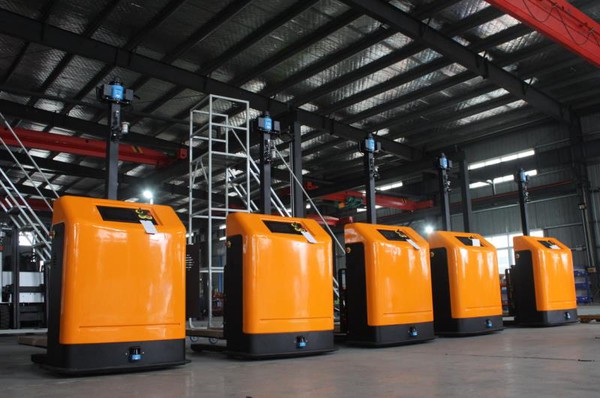
As autonomous forklift technology continues to mature and evolve, these forklifts will be applied in more industries, bringing even greater transformation to the warehousing and logistics sector. The era of smart technology has arrived-are you ready?
Contact LTMG Forklift for a quote now: https://www.ltmgforklift.com/contact-us